

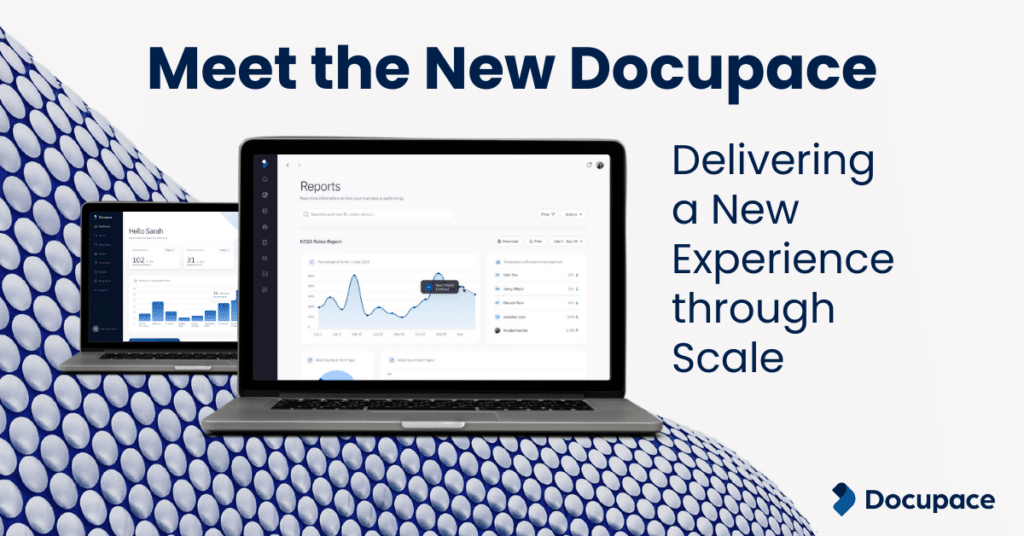
Enhancing the new Docupace platform to deliver a reimagined user experience pushed our teams to improve both the front-end user interface and back-end performance. This meant increasing scalability—not just in what we do, but in how we do it.
Docupace’s scalability initiatives focused on the following 12 leverage points.
- Performance Optimization: Improve system performance to handle increased workloads efficiently without compromising response times or user experience.
- Horizontal Scaling: Implement strategies to scale out by adding more instances of servers, services, and components to distribute workloads across multiple resources.
- Vertical Scaling: Upgrade individual components such as servers, databases, and infrastructure resources to handle higher loads by increasing capacity, processing power, or memory.
- Fault Tolerance and Reliability: Enhance platform resilience to handle failures gracefully, ensuring the Docupace platform remains available and responsive during hardware failures or network issues.
- Elasticity: Design systems to dynamically scale resources up or down based on demand, automatically provisioning or deallocating resources to maintain optimal performance and efficiency.
- Load Balancing: Distribute incoming traffic evenly across multiple servers or instances to prevent any single component from becoming a bottleneck.
- Database Scaling: Optimize database performance and scalability using sharding, replication, or partitioning to improve read and write throughput.
- Caching and Data Optimization: Reduce load on backend services and databases by storing frequently accessed data in memory or cache layers.
- Scalable Architecture Design: Build modular, loosely coupled systems that can be scaled independently, enabling flexible growth and efficient resource allocation.
- Monitoring and Alerting: Track system performance metrics, detect bottlenecks or failures, and proactively address issues before they impact users.
- Cost Optimization: Optimize resource usage and costs through dynamic scaling, pay-as-you-go cloud services, and elimination of inefficient resource utilization.
- Scalability Testing: Simulate real-world usage scenarios to identify bottlenecks, validate improvements, and ensure the platform performs under load.