
If your trade surveillance flags thousands of transactions a month and most turn out to be nothing, you don’t have risk-based supervision. You have noise. And noise is exactly where real risk hides.
Industry estimates put the false-positive rate on transaction-monitoring alerts as high as 90 to 95 percent, a benchmark that traces back to PricewaterhouseCoopers (PwC) analysis and keeps getting reproduced. Compliance teams spend an estimated 70 to 80 percent of their alert-handling time closing items that were never a problem. That’s time your best reviewers aren’t spending on the transactions that could hurt the customer and the firm.
The Two Ways Crying Wolf Burns You
A noisy system fails in one of two directions, and both look bad in an exam.
The first is alert fatigue. When reviewers close hundreds of false alarms a week, they start rubber-stamping. The one alert that mattered gets closed with the rest. Supervision technically happened. It caught nothing.
The second is backlog. The team can’t keep up, alerts age past their review deadline, and now you have documented evidence that reviews were late. FINRA Rule 3110 expects a supervisory system reasonably designed to achieve compliance. A system drowning in false positives is hard to call reasonably designed.
The Fix Is Sharper Rules, Not More of Them
Firms diminish the noise by strengthening risk-based supervision. You stop treating every transaction the same and start pointing attention where the risk lives. Configure thresholds to your own written supervisory procedures, so alerts fire on high-risk solicited transactions that trigger a rule you care about, not on generic activity. Bulk-approve the clean stuff, so reviewers never touch unsolicited, alert-free transactions one by one. Segment accounts by risk, with stronger thresholds on senior investors or heightened-supervision reps and targeted thresholds on low-risk accounts.
The result is fewer alerts, and the ones that fire are worth reviewing. A supervisor who trusts the alerts reviews them properly.
Where AI Takes This
The market is moving this way with real money. The trade surveillance systems market is projected to grow from about $3.0 billion in 2025 to $5.9 billion by 2030, a 14.5 percent compound annual rate, with software leading the category on the back of AI and machine learning.
AI’s job in surveillance isn’t to replace the supervisor. It’s to shrink the pile. Machine learning trims the false positives so a human spends time on the transactions that have risk, and trend analysis by rep, asset, or alert type surfaces patterns a one-alert-at-a-time view will never show you.
Surveillance was never about generating alerts. It was about catching the trades that matter. A system that cries wolf trains your team to stop listening, and that’s leads to inadequate supervision.
Cut the noise, and the rest is signal.
No call, no form. Run your own book through the Coverage & Exposure Calculator and see where you stand in about two minutes.
Cut the noise, and the rest is signal.
No call, no form. Run your own book through the Coverage & Exposure Calculator and see where you stand in about two minutes.
You can run the most conscientious supervision program in the industry. If you can’t evidence that the review happened, when it happened, and who signed off, the regulator treats it as if no supervision occurred. That single standard is quietly splitting the industry into two groups.
One group has automated trade surveillance and account monitoring. When an examiner asks for proof, they export it in minutes. The other still supervises the old way: spreadsheets, sampling, and a compliance team stitching together evidence after the fact. Both groups care about doing the right thing. Only one can prove it on demand. And the gap between them is widening.
The divide isn’t about effort. It’s about proof.
Manual supervision has a structural flaw. It scales with headcount, and headcount doesn’t scale. Trade volume rises. Product complexity rises: alternatives, structured products, leveraged and inverse funds, complex annuities, all carrying sharper customer suitability and Reg BI scrutiny. Meanwhile, the compliance team stays roughly the same size. So firms sample transactions. They review a slice and hope the slice is representative of the rep’s book of business.
Examiners have stopped accepting that. FINRA scoped Regulation Best Interest into roughly 350 exams in a single cycle, with exception rates running 50 to 70 percent. The message is clear: they expect the best-interest standard embedded in daily supervision, not demonstrated by a quarterly sample. Firms with risk-based surveillance don’t sample. They screen every transaction against configured thresholds, flag the ones that break a rule, and document the disposition of each alert. That’s the difference between “we reviewed some trades” and “we reviewed all of them, and here is the evidence.”
Why the Gap Is Widening Now
Three forces are pulling the two groups apart at once. Documentation demands keep climbing: regulators want the review, the reviewer, the timestamp, and the resolution retained and exportable, and an audit trail that lives in someone’s inbox isn’t an audit trail. Enforcement is getting more surgical: in August 2024 the SEC charged 26 firms and collected more than $390 million, largely for recordkeeping and off-channel communication failures. The violation in most of those cases wasn’t fraud — it was the inability to capture and produce records.
And the failure mode is usually a detection gap, not bad actors. One such large, establish broker dealer failed to file roughly 1,500 suspicious activity reports between 2009 and 2019 because its system applied the wrong dollar threshold. No villain. A control that failed to catch what it was built to catch, running for a decade before anyone flagged it. Manual programs can’t close these gaps by trying harder. The math doesn’t work.
What Automated Surveillance Looks Like
Buyers evaluating surveillance tools should look for four things. Every transaction captured: a trade blotter that consumes direct feeds from clearing and custody, no rekeying, no gaps between systems. Risk-based alerts, not noise: thresholds configured for your own rules, so high-risk solicited transactions trigger alerts and clean unsolicited trades get bulk-approved. Account groups that match how you supervise, segmenting senior investors, heightened-supervision reps, or accounts by OSJ, with dynamic groups that add new accounts as they meet your configured criteria. And an audit trail that evidences supervision for the exam, capturing every action, comment, and resolution with a name and timestamp and keeping it after the alert closes.
The same logic runs across the stack: RIA annual client reviews built to withstand SEC and state exams, and bank trust reviews that automate the annual investment reviews OCC Reg 9 requires. Do the review, evidence the review, export the proof.
The Market Is Already Voting
The trade surveillance systems market is projected to grow from about $3.0 billion in 2025 to $5.9 billion by 2030, a 14.5 percent compound annual rate, with software leading on AI and machine learning built into the monitoring itself. That spending isn’t caution. It’s firms recognizing that manual supervision has become the expensive option once you price in the enforcement risk it leaves on the table.
ComplianceEdge has run this playbook for 25 years, monitoring more than 750,000 investor accounts representing over $3.5 trillion in assets across 100-plus institutions, including 14 of the 50 largest U.S. banks and trust companies. That’s the scale a purpose-built surveillance engine reaches. It’s not the scale a spreadsheet reaches.
Which side are you on?
The firms pulling ahead didn’t buy more technology. They changed what they expect technology to do. Surveillance stopped being a check-the-box mentality and became a control that the firm can use to demonstrate risk-based supervision.
See which side of the divide your program is on.
Learn the five failure modes examiners see most, and what switching actually changes in our latest whitepaper, Where Firms Fail Surveillance.
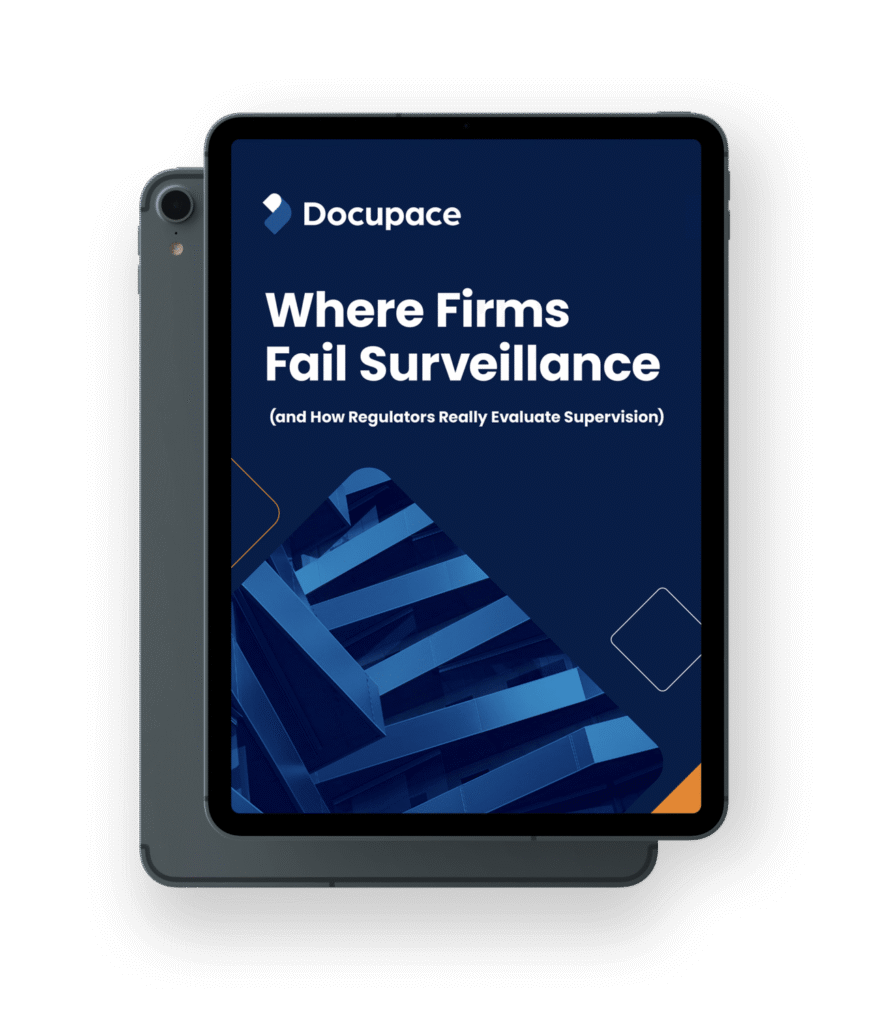
See which side of the divide your program is on.
Learn the five failure modes examiners see most, and what switching actually changes in our latest whitepaper, Where Firms Fail Surveillance.
Ask most firms where compliance sits on the org chart, and you’ll hear some version of “overhead.” Necessary, non-negotiable, and a cost you’d shrink if the regulators let you. That framing is exactly why so many programs stay stuck on spreadsheets and month-end reports. If it’s a cost, you minimize it. You don’t invest in it.
The firms pulling ahead flipped that. They treat supervision the way they treat their custody feeds or their CRM: infrastructure that either lets the business scale or quietly caps it. And once you see it that way, the spreadsheet stops looking thrifty and starts looking like the thing holding you back
The Moment Growth Meets the Ceiling
Here’s where it bites. A manual compliance process holds together at a few hundred accounts. Add advisors, acquire a book, expand into a new channel, and the supervision process starts to crack. Reviews fall behind. The team asks for more headcount. And headcount is the most expensive, slowest, least scalable way to solve a volume problem.
So the firm faces a quiet choice it never planned for: slow the growth to match what compliance can handle, or grow anyway and let the review backlog become an exam risk. Neither is a good option, and both were avoidable. The process that felt cheap at 200 accounts is now the constraint on the whole business.
What Changes When Supervision Scales on Its Own
A platform that screens every transaction and builds its own audit trail doesn’t care whether you have 200 accounts or 20,000. Add 50 percent more accounts and the system absorbs it — no new hires, no backlog. Headcount scales linearly. Software doesn’t.
It shows up in recruiting, too. Strong compliance professionals don’t want to spend their careers re-keying reports into a spreadsheet. Modern tooling is part of how you attract and keep the people who make the supervision strategic instead of clerical. And it shows up in M&A: acquirers now put data maturity and compliance-tech depth on the diligence checklist, and a fragmented, manual program shows up as a liability in the valuation.
Running the Actual Numbers
The cost-center framing also hides a real number. A small compliance team spending most of its week on manual reviews can run well into six figures a year in labor alone. Layer on the risk it leaves exposed (a single missed Reg BI violation, a single exam deficiency finding, customer harm) and the “cheap” option isn’t cheap. It’s just deferred. Automation typically pays for itself well inside the first year once you count the labor it returns and the risk it retires, and after that it’s returning capacity every month.
Compliance is where you decide how big you can get without breaking, not where you go to save money. Treat it as infrastructure and it scales with the firm. Treat it as overhead and, sooner or later, it becomes the ceiling. The firms that already made that call aren’t spending more on compliance. They’re spending it on the part that scales.
Turn compliance into infrastructure that scales.
Start by finding the ceiling your current headcount supports. All it takes is two minutes. No call, no form.
Turn compliance into infrastructure that scales.
Start by finding the ceiling your current headcount supports. All it takes is two minutes. No call, no form.
Most firms are in growth mode. According to the 2024 WealthManagement.com/WMIQ study, on average, that growth target is an estimated 14.3%. But that forward momentum often comes at a cost of burnout. When teams are stretched thin, working longer hours and juggling a mountain of work, the quality of client service can take a backseat. At the same time, employee burnout and inevitable turnover can be other consequences.
The reality is there’s a better way to see tangible results. Sustainable growth shouldn’t push people past their limits. Instead, it should allow them to work smarter through optimized processes. This is in contrast to the traditional approach to firm growth, which means adding more clients. More people in the mix means more paperwork, more meetings and a higher administrative burden. In this paradigm, advisors must grapple with essential but time-consuming non-client-facing activities.
When compounded over months or years, these obligations drain their energy and dull their shine. This model is tiring and unsustainable. It’s only a matter of time before your team makes costly errors due to exhaustion and monotony.
Onboarding can be a smooth, automated and predictable experience every time. Clients don’t have to be flooded with emails and forms that need to be populated manually. With a digital experience, the process can be completed with a few clicks. This isn’t a mere thought exercise but a reality for firms that embrace technology and operational efficiency.
When you trust processes, you create a scalable foundation for the future. Automation means you reduce the chance of human error, maintain consistency and free up precious staff time. This is how your team can take on more work and do it well without feeling pressed. Growth feels within reach and occurs at a manageable pace, not a chaotic frenzy that requires all hands on deck at the last minute.
According to the 2024 Kitces Financial Planner Productivity Study, revenue per advisor rose modestly, but the most impressive figure was a 24% jump in revenue per employee, from $250,000 to $310,000. In other words, operational efficiency gains are directly linked to support staff. Conversely, when staff are slacking or lack support infrastructure, the entire firm suffers. Regarding the latter point, Michael Kitces makes the case that building the right team is a major factor in productivity.
Technology is what makes process optimization possible. The right industry-centric platforms make document management seamless, automate workflows and integrate with your existing CRM. The latter is an important facet because it creates a single source of truth for all client-related activities.
In a real-world context, take the example of preparing for a client review meeting. This legwork can easily take hours to complete. In a process-driven firm, you can rely on shortcuts to produce performance reports, compile all relevant documents and create a meeting agenda. All you have to do is double-check the contents instead of spending hours corralling all the elements and showing up distracted. You can use this newfound time to deepen client conversations and work on strategic planning, elevating your reputation.
Embrace the Power of Processes
Scaling your firm doesn’t have to feel like a zero-sum game. You don’t have to jeopardize the well-being of your team for the sake of progress. By relying on processes powered by the right technology, you can hit key milestones every quarter while keeping your people happy and healthy. The idea is to think in terms of making the most of the hours you have instead of trying to squeeze more out of them.
Ready to build a firm that scales without burning out your best people? Download the guide, The Cost of Operational Inertia, and learn how top firms are strengthening their operations, cutting costs and creating space for growth right now.
Many financial advisors toggle between multiple manual systems several times in an hour. Information lives across spreadsheets, physical files and various platforms. The disorder that comes from context switching directly impacts your ability to personalize service.
Take, for example, the common task of preparing for a review meeting. You might pull reports from different platforms to capture a client’s financial picture. Though necessary, these tasks are time-consuming and detract from strategic planning and rich client conversations. When you’re drowning in paperwork, you can’t confidently show up as your best self, and that erodes your reputation.
Personalization is the antidote to this chaos, and it’s an underrated facet of modern financial services operations. Clients want to work with someone who’s in tune with their unique goals, anxieties, and life circumstances. They want a partner, not just an order taker. It might seem counterintuitive on the surface, but the best way to curate such an experience goes beyond face time. It’s about implementing better processes behind the scenes to help you work more strategically.
Structured processes and personalization are not at odds. In fact, many seasoned advisors will tell you that this back-end work leads to more meaningful client relationships without cramping their style. In a May 2024 episode of The COO Roundtable podcast, Adrian Chastain of Gratus Capital said, “Process isn’t meant to be scary or rigid; it isn’t meant to take away creativity.”
By standardizing the mundane, administrative aspects of your workflow, you’ll find your schedule can accommodate more meaningful interactions and you can apply creative problem-solving. Here are two reasons you should prioritize standardization in the year ahead and what that looks like in a real-world setting.
1. Eliminate Inconsistency
A lack of standardization means the client experience can feel unpredictable. One client might report a seamless experience, while another might get frustrated by a lag in response time to repeated requests. This perceived poor level of customer service puts a damper on the trust you work so hard to build. This can be especially problematic when trying to court clients across the lifespan. The Investopedia Affluent Millennials Survey found that 65% of Gen Y reported having more trust in financial advisors than Gen Xers (58%). A standardized process helps you take care of all clients every time.
2. Rein in Disorder
Without having a go-to system in place, you risk missing important details. Did your client mention a child starting college or a parent moving into assisted living? Did they mention needing access to cash to fund an emergency? Following up on these concerns shows you’re listening and want to help solve their problems.
Outsmart Your Competition with Technology
A defined process sets you up for success in that the client experience is smooth and predictable, from the first meeting to ongoing reviews. Over time, this consistency becomes your brand. Clients internalize the feeling they’re in capable hands. Feeling at ease makes them more willing to share the personal details necessary for custom advice. Everyone wins.
Implementing robust processes helps you apply your critical thinking and interpersonal skills. Digital workflow automation platforms, like Docupace, help bridge the gap between firm operations and client satisfaction. It starts with a fully digital onboarding experience that eliminates redundant paperwork and manual data entry. Then, you can unlock the benefits of a centralized hub for all client documents and data. No more scrambling for important documents at the last minute.
Make 2026 the year you step up your game. By automating compliance and workflow rules, Docupace helps you keep more clients for life. Welcome to the era of the efficient, compliant and client-centric practice. Click here to schedule a discovery call.
You can run, but you can’t hide from compliance. At a minimum, RIAs are subject to various SEC rules and regulations governing marketing and disclosures to clients, best execution for client transactions and disclosures of conflicts of interest and disciplinary information, according to the U.S. Department of the Treasury’s 2024 Investment Adviser Risk Assessment.
Compliance often feels siloed, like another box to check or a report to file. Some financial planners approach it as a necessary evil. But what if compliance weren’t piecemealed but woven into your daily activities? When compliance is integrated into your tasks, it transforms from a pain point into a powerful asset. It enhances efficiency, reduces risk and perhaps most importantly, helps you deepen relationships with clients.
Integrating compliance is not about complicating your process. Instead, it’s a way to make your existing workflow smarter and safer. Here’s a look at what embedded compliance looks like in practice and how it can support operational goals and solidify client relationships.
Compliance may or may not be reflected in your operational DNA right now. It shows up in several key areas, making your work more fluid and more secure.
Seamless Onboarding
A compliant onboarding process is your first touchpoint to build client trust. When compliance is the norm, order and standardization reign. Advisors can draw up new client agreements based on approved templates, ensuring all necessary disclosures are accounted for. Digital identity verification happens promptly and securely. Plus, this automated workflow eliminates the manual back and forth that can clutter inboxes and slow down results.
Effortless Document Management
Staying on top of files of paperwork creates headaches. Finding a specific document while the clock is racing can feel like an impossible pursuit. An integrated system solves these problems. With a compliance-first approach, every document is captured digitally and stored in a secure and centralized location. Version control is the default, so you always know you’re working with the latest file. Documents are indexed and tagged, allowing for searchability. Automatic retention policies mean files are kept for the required duration and securely removed afterward. This makes audits less daunting and empowers you to respond to client requests with speed and accuracy.
Automated Communication and Disclosure
Communicating with clients opens up the Pandora’s Box of compliance considerations. Manual tracking is neither convenient nor a sustainable long-term approach. When compliance is part of your workflow, communication becomes less clunky. Pre-approved templates for routine client interactions offer a layer of protection. Systems can automatically log all outgoing and incoming correspondence so you have a thorough and auditable record. In the case of sending performance reports or trade confirmations, required disclosures are always included. This automation frees you from sweating over the nitty-gritty of every interaction.
Sophisticated Transaction and Portfolio Monitoring
Keeping tabs on client accounts for suitability and erratic activity is a core compliance function. Doing this manually is inefficient and prone to human error. An integrated compliance framework takes care of all the important details. By setting up rules and alerts, you create a second set of fresh eyes. Continuous monitoring helps you fulfill your fiduciary duty while protecting both your clients and your firm from threats.
Make Compliance a Breeze
Compliance doesn’t have to feel like a bear. When thoughtfully integrated into your order of operations, it becomes the fuel for efficiency, security and growth. It gives you the freedom to worry less and focus on your clients with greater confidence.
With more than three-quarters of financial institutions planning to double down on digital transformation investment in the next three years, this isn’t the time to sit on the sidelines. Turn to Docupace for a full-service, integrated platform. Click here to schedule a discovery call.
Accuracy is an element you can’t leave to chance in the advisory world. One typo or a missed signature can cause compliance headaches, financial losses and jeopardize client trust. While human error is inevitable to some extent, the goal should be to minimize its occurrence, impact and severity. The onus rests on firms to implement technology that reduces mistakes without undermining the personalized service that builds strong client relationships.
It’s a reality that technology can be perceived or received as cold and impersonal, despite the best intentions. However, the most effective platforms don’t replace human touch — they complement it. By automating nitty-gritty tasks, technology helps advisors and their teams focus on forging connections, understanding needs and providing custom solutions. Docupace can help advisors fill in the gaps.
Mistakes often occur when people get caught up in the details. It’s a perfect storm when staff are tired or burnt out but must go through the day to complete necessary but tedious manual processes over and over. New account openings, client onboarding and related data entry are critical functions where even small errors can come with major consequences.
Docupace’s intelligent automation helps to offset some of this cognitive load. Elements like pre-filled forms, guided data entry and built-in compliance checks mean the platform acts as a digital safety net. Acting as a second set of eyes, it flags missing information, confirms required fields are completed correctly and standardizes firm-wide processes. Such an approach greatly cuts down on common errors, such as incorrect data input or incomplete paperwork. In other words, you get a higher level of accuracy from the outset.
Reducing operational friction can be quantified beyond efficiency. Think about it as protecting your most valuable resource: time. With a more manageable workload, your team can see the bigger picture more clearly and have more bandwidth for high-value activities. Consider the fact that, per InvestmentNews’s 2025 InvestmentNews Advisor Benchmarking Study, revenue per professional exceeded $1 million. The publication cited technology adoption, streamlined operations and improved team structures as contributing factors. Leading firms served nearly double the clients per professional compared to others, while keeping overhead at just 25.7% of revenue.
But efficiency shouldn’t come at the expense of client relationships. That’s why Docupace helps keep the financial advisory business personal. Instead of feeling burdened by the weight of administrative tasks, advisors can allocate time and energy to productive client conversations. They can better prepare for meetings, support clients and their goals with relevant insights and focus on positioning themselves as a trusted expert. The technology works effortlessly and seamlessly, handling all the moving parts so that the advisor can leverage their strengths without distractions.
Success in 2026 reflects both operational excellence and genuine client care. As Kiplinger puts it succinctly in a December 2025 article, “next year will be defined by the seamless integration of innovative technology and the irreplaceable human touch.” The future belongs to firms that use technology as a bridge between them and clients so that every interaction is smoother and more meaningful.
Bringing It All Together
Docupace is the sum of all these parts. It streamlines backend processes so clients don’t get multiple requests for the same information. From here, paperwork is processed quickly and correctly. Clients notice their requests are handled in a timely manner. All of this reflects positively on your firm. A smooth user experience builds a foundation of trust, so you have fertile ground for client relationships to flourish. Everyone wins when automation is baked in, not an afterthought.
Ready to boost client satisfaction through smarter processes? Learn how Docupace can fit into your tech stack. Click here to schedule a discovery call.
The use of artificial intelligence is quickly advancing in all areas of life, and wealth management and financial services are no exception.
AI can assist with a wide range of tasks, from automating repetitive data entry to creating personalized marketing campaigns for potential clients and running simulations for various types of accounts. And while more advisors are turning to AI (one recent survey found that 74% of firms are using AI, including 95% of RIAs), the need to stay compliant remains crucial.
However, it can be challenging for firms and advisors to stay up-to-date with the most current AI regulations while also adopting the new technology itself. Here are three ways firms can stay current on AI compliance regulations.
1. Know the Basics
FINRA and the SEC have taken a measured approach to AI regulation. They are observing how firms adopt the technology before creating prescriptive rules, a strategy similar to how they approached social media a decade ago. The absence of AI-specific rules does not mean firms can move fast and break things. Regulators will evaluate AI use through the lens of existing rules, giving them wide latitude. A communication rule violation does not become acceptable just because AI generated the content.
Consider this scenario. An advisor uses an AI tool to draft a quarterly market commentary for clients. The AI generates compelling content but includes a statement like “stocks have never declined over any 20-year period,” almost true but technically inaccurate. Under FINRA Rule 2210, that communication must be “fair and balanced.” The advisor is responsible for the content, whether written by them or AI.
This is where human oversight is critical. Someone with market knowledge must review, fact-check and approve AI-generated content before it reaches clients. The same principle applies to AI-assisted portfolio recommendations, client onboarding documents or automated responses to client inquiries. The technology can draft, but humans must verify.
Understanding these existing rules is the foundation. Firms should run any AI-related activities through the same compliance framework used for non-AI content. Key rules include:
- FINRA Rule 2210 All communications must be fair and balanced with regulations for approving, reviewing and maintaining records.
- SEC Rule 17a-3 (Books and Records) Establishes record-keeping requirements for client information, communications and related records.
Following these rules ensures that AI-generated content meets the same compliance standards as traditional content.
2. Create Internal Frameworks
Without major guidance from FINRA and the SEC, firms are largely on their own to set the tone for their AI usage and compliance. When firms develop internal frameworks and guidelines, they can adopt a more cadenced approach to AI, setting them up to stay compliant when FINRA and the SEC release AI-specific rules.
That means that, as tempting as it may be to turn to AI for everything, it still needs guidelines and human oversight. Before rushing to use AI, firms and advisors need to conduct thorough due diligence on AI tools and establish effective governance frameworks.
To stay compliant, firms should consider internal guidelines and frameworks for the following:
- Audit trail capabilities: Can the tool document who prompted it, what output it generated, and who reviewed/edited that output?
- Explainability: If the AI recommends a portfolio adjustment, can you explain the reasoning to a client or regulator?
- Data handling: Where does client data go? Is it used to train the model? Does it meet your BAA requirements?
- Vendor due diligence: Has the vendor undergone SOC 2 audits? What’s their incident response plan?
Internal frameworks tell you what to do. But compliance ultimately depends on people following those frameworks. That’s where culture becomes the final piece.
3. Build a Culture of Innovation + Compliance
Compliance should be a top priority for every advisor and firm employee, regardless of whether it involves AI. To create effective compliance efforts, advisors must foster a culture of compliance.
Building a compliance culture means empowering employees with an understanding of current regulations, identifying key red flags and knowing what to do if something falls out of compliance. Future-proof compliance training is continually updated to incorporate the latest technology, industry changes and new regulations, especially around AI. Every employee should be current on compliance training and understand their role in protecting the firm and client data. As everyone focuses on the future of compliance, firms must have all hands on deck to ensure they are prepared for whatever comes next.
However, it’s important to add elements of innovation and flexibility into that compliance culture. Adopting AI means staying agile in the face of new developments and continually finding ways to improve. With a strong compliance culture, advisors can also encourage innovation that falls within the firm’s guidelines.
Preparing for What's Next
While FINRA and the SEC haven’t issued AI-specific rules yet, signs point to increased scrutiny. The SEC’s recent exam priorities mention “emerging technologies,” and FINRA has issued guidance on algorithmic trading and digital communications. Forward-looking firms should expect:
- Disclosure requirements: You may need to tell clients when AI assists with advice or communication
- Model governance standards: Similar to how quantitative models require documented methodologies
- Heightened supervision: Proving that humans meaningfully reviewed AI output, not just rubber-stamped it. Firms building strong internal frameworks now will adapt more easily when — not If — specific rules arrive.
AI compliance ultimately comes down to documentation and audit trails. When an AI tool generates client communication or assists with account management, can you show regulators the full chain of custody — who created it, who reviewed it, who approved it, and where it’s stored? Docupace’s platform automatically maintains the record-keeping required by SEC Rule 17a-3, creating audit trails for every workflow — whether AI-assisted or not. Docupace leadership is also actively involved in the FSI AI committee that is supporting the outcomes and education for legislation. As your firm adopts new technologies, make sure your compliance infrastructure keeps pace. Schedule a discovery call to see how Docupace supports AI-ready compliance. Click here to schedule a discovery call.
It can send a shiver down your spine. The prospect of a regulatory audit can create a nightmare situation if your team isn’t prepared — and with good reason. In late 2024, the SEC reported that it brought in a record $8.2 billion in fines in its previous fiscal year.
This is where mock audits are smart: they help you spot weaknesses, tighten up your documentation, and build the confidence you need to handle an unplanned audit.
Follow the steps outlined below to ensure your team is audit-ready no matter the situation.
Step 1: Define the Scope and Audit Type
Start by clearly outlining the parameters of your mock audit to ensure it’s focused and actionable. The first order of business is to identify the type of audit you’re simulating. Is this a review based on SEC, FINRA, or state-level standards? Each has its specific requirements.
Then, define the scope. Will you assess the entire firm, or zero in on areas like fee billing, client communications, or advertising compliance? Finally, define the audit period (i.e., a review of activity from the past 12 months).
Step 2: Assign Internal Roles
Give your team clear responsibilities to keep the process organized and efficient. For instance, the team lead will simulate the role of an external auditor. The documentation coordinator will be charged with collecting and organizing the necessary documentation. Department heads should communicate specific deadlines and tasks. Mock interview representatives should be prepared to rehearse answers to audit-related questions.
Step 3: Prepare Key Documents
Gather and organize all the critical documents related to an audit. It helps to review your firm’s document retention policy to ensure compliance. Collect essential records:
- Client agreements, including digital signatures (independent broker/dealer LPL Financial received a $3 million fine after a number of brokers were found to have falsified signatures)
- ADV Part 2 and CRS
- Marketing and social media materials
- Fee schedules, billing records, and trade confirmations
- Compliance manuals and Form U4
- Client communication logs (i.e., emails, call notes)
Store these securely in a shared location for easy access during the review. Also be strategic with naming the files to include name of client, account, year, etc.
Step 4: Run Compliance Checks
Evaluate your processes and documentation against regulatory standards. Consider the following:
- Trade Logs: Check trade logs for best execution compliance.
- Delivery Dates: Review delivery dates for privacy notices and Form ADV.
- Advertising: Ensure all promotional materials comply with content and disclosure requirements. On September 11, 2023, the SEC announced changes related to the Marketing Rule. JD Supra presents the key takeaways in a February 2024 article.
- Client Disclosures: Confirm disclosures are accurate, complete, and delivered on time.
Step 5: Conduct Mock Interviews
Train your team to respond in a calm and cool manner. It’s a good idea to do the following:
- Simulate Audit Scenarios: Challenge team members to explore common audit scenarios like, “Walk me through your client onboarding process.”
- Evaluate Responses: Analyze clarity, consistency, and supporting documentation.
- Provide Feedback: Identify holes and give constructive guidance to resolve issues.
Step 6: Review and Document Findings
Once your mock audit is complete, assess the results and characterize your observations.
- Identify Gaps: Note missing documentation, inconsistent processes, or outdated policies.
- Flag Issues: Document any late filings or minor compliance violations.
- Actionable Insights: Use your experiences to create an “audit response playbook” that your firm can refer to during a real audit.
Step 7: Follow Up and Fix Gaps
Address weaknesses and level up your compliance framework. For instance, you should focus on key areas like:
- Assigning tasks to resolve identified issues
- Updating written policies and procedures based on audit findings
- Conducting necessary staff training to fill knowledge gaps
- Documenting all changes made, ensuring alignment with compliance standards
Step 8: Set a Recurring Schedule
Keep audits consistent to maintain and support your agility. Firms that do that prioritize the following:
- Annual Calendar: Schedule mock audits on an annual basis.
- Variation: Rotate focus areas periodically to cover different aspects of compliance.
- Continuous Improvement: Build on lessons learned from each audit, ensuring ongoing improvement is baked into processes and documentation.
Docupace: Your Mock Audit Secret Weapon
Mock audits are one of the most effective tools firms can use to prepare for regulatory scrutiny. But even the best checklists and internal procedures fall short without the right systems in place to support them. If your team is still juggling spreadsheets, disconnected software, or manually tracking documentation, the risk is real, and so is the time waste.
Docupace simplifies every step of your compliance and surveillance process. With a single, rule-driven platform designed specifically for wealth management, your team can automate document collection, normalize data, and stay ahead of regulatory changes with real-time alerts and audit-ready reports. From mock audits to actual examinations, Docupace helps you manage risk without managing chaos.
If you’re ready to reduce human error, eliminate redundant work, and feel fully prepared for your next audit, Docupace is the partner that makes it possible. Experience a compliance platform built to protect your firm and empower your team to focus on what really matters.
Schedule a discovery call with Docupace today and see how effortless compliance can be.
Opening new client accounts is a common activity, but it’s not always straightforward. Not in Good Order (NIGO) errors can get in the way of operational success. These issues occur when account applications are incomplete, inaccurate or don’t meet compliance regulations. Such snafus can create delays, cause undue frustration for staff and clients, jeopardize one’s reputation and prove to be costly.
Why It Matters
While NIGO errors may not trigger fines, they’re often tied to broader compliance issues, particularly in recordkeeping. The U.S. Securities and Exchange Commission (SEC) has imposed hefty fines on firms for recordkeeping violations. For instance, in 2024, the SEC fined 26 firms a combined $392.75 million for failing to maintain and preserve electronic communications.
This worst-case scenario is unlikely to happen. However, in the interest of helping you sleep better at night, we’ve outlined the top five reasons for NIGO errors and how to get in front of them.
5 NIGO Errors to Watch For
1. Incomplete or Missing Documentation
Missing or incomplete forms and documents can create delays. In these situations, advisors or clients overlook required fields or omit supplemental documentation, like identification or signatures.
How to Prevent This:
- Use a checklist to guide account opening activities.
- Implement digital forms with required fields tied to a workflow.
- Use tools like Docupace with built-in technology that ensures all required documentation is complete before submission.
2. Manual Data Entry Mistakes
Errors can find their way into documents, especially when advisors are under tight deadlines. Incorrect names, account numbers, or financial information can all lead to NIGO flags.
How to Prevent This:
- Use a digital solution like PreciseFP to collect and maintain clean, accurate client data.
- Double and triple-check critical details before hitting “submit.”
- Integrate your CRM with platforms like Docupace to improve accuracy.
3. Non-Compliance With Regulations
The financial services industry is governed by stringent requirements that vary by jurisdiction and account type. Failing to meet AML/KYC verifications or disregarding updated regulatory requirements often introduces delays.
How to Prevent This:
- Stay current on regulatory changes through ongoing compliance training.
- Integrate compliance-checking solutions into your account-opening process.
- Invest in platforms like Docupace, which automatically flags compliance issues before it’s too late.
According to the 2023 Kitces Report On Financial Advisor Technology Use, only about 54% of advisors reported using solutions to address compliance. Where do you stand in terms of adoption?
4. Incorrect Signatures or Missing E-Signatures
Signatures that don’t match clients’ official records or missing e-signatures are errors that can result in account application rejections.
How to Prevent This:
- Adopt e-signature solutions that verify authenticity and store records securely.
- Cross-reference signature requirements based on the account type and client profile.
5. Lack of Oversight and Communication
When account opening is a team effort, it can have unintended consequences and create trouble downstream. For example, poor coordination and lack of visibility can lead to miscommunication, delays, and errors.
How to Prevent This:
- Implement a centralized workflow management system like Hubly.
- Encourage advisors, clients, and back-office staff to use solutions that track real-time progress.
Reduce NIGO Errors, Worry Less
There’s a better way — investing in the right tools on the front end can save you precious time, resources, and even your hair. The 2024 Kitces Report On How Financial Planners Actually Do Financial Planning captures this sentiment: “The single greatest constraint on advisors’ productive capacity is time — making it their most valuable resource.”
That’s where Docupace comes in. Our user-centric cloud-based platform boosts efficiency by automating and digitizing your account-opening workflows. Put simply, Docupace makes it easier to tackle NIGO errors before they occur.
But don’t just take our word for it. Sign up for a discovery call today and experience how our platform can revolutionize your new account opening process. Reduce errors, save time, and deliver a seamless client onboarding experience through better process management.
New client onboarding is more than a formality. In fact, it lays the foundation for your whole relationship with them. This critical time is when you establish expectations regarding the client services experience. It isn’t the time to cut corners. Still, you might wonder how much time you should spend on this process and how you compare to others.
Timelines will vary, but here are some industry standards to consider:
- Simple accounts and goals: 1–2 weeks
- Moderate complexity (i.e., 1–2 investment accounts): 2–3 weeks
- Complex clients (i.e., high net-worth individuals, trusts, or multiple account types): 4–6 weeks
The best client onboarding experiences are efficient for the client, and simple and seamless for your back-office staff. Don’t get so caught up in meeting arbitrary timelines that you dampen client satisfaction or accuracy. We’ve outlined considerations and strategies to help you find efficiencies in onboarding without putting quality or your reputation on the line.
Slow Onboarding? These Four Areas May Be To Blame
The length of your onboarding process can vary depending on several factors:
1. Compliance Requirements
Regulatory requirements, such as Know Your Customer (KYC) and Anti-Money Laundering (AML) laws, can introduce complexities. While necessary for compliance reasons, they can also create extra layers in the onboarding process. A thoughtful approach to compliance documentation can minimize delays, however.
2. Client Cooperation
Onboarding is bidirectional. Sometimes, back-office staff get caught up in other priorities. However, sometimes delays stem from the clients themselves. Whatever the reason for lags, proactive communication can be the antidote.
3. Technology and Workflow
Firms that adopt the range of modern technology, like client portals, e-signature tools, and automated workflows, can see significant reductions in onboarding time. Inefficient processes or failure to get with the program, on the other hand, can cost you operationally.
4. Firm’s Internal Processes
Your team members need to be in lockstep when it comes to roles and responsibilities. The same goes for a standardized workflow in place. The strength of your internal processes and staff’s agility can determine how quickly new clients can be onboarded.
5 Ways To Tighten Your Process
If you’re struggling to deliver on these fronts, it may be time to revisit your onboarding process. Here are some strategies to help focus your attention and efforts:
1. Standardize and Automate Workflows
Use practice management software designed to streamline workflows. Automate routine tasks like gathering standard documents or sending reminders. According to June 2023 research from McKinsey, half of today’s work activities could be automated between 2030 and 2060.
2. Invest in Digital Tools
Using DocuSign for e-signatures, financial planning software, and secure client portals can keep paperwork to a minimum and allow for faster processing. Younger clients might even expect technology to be baked into the onboarding process.
3. Communicate Expectations with Clients
Be clear about what clients need to provide and by when. Clear communication helps you develop a better working relationship.
4. Assign Clear Responsibilities
Define who handles what during onboarding. Assigning specific roles minimizes confusion and duplicating efforts. Plus, it’s good for employee engagement. In 2024, Gallup and Workhuman found that employees who fully understand what’s expected of them at work are 47% less likely to experience frequent burnout and 23% less likely to report struggles with work-life balance a few times a week or more.
5. Monitor and Optimize Progress
Use performance metrics to calculate average onboarding timeline, identify bottlenecks, and refine as necessary. Parse feedback from clients and staff to gain objectivity that you can translate into action.
No matter your specific key performance indicators, your firm will come out ahead if you invest in processes and platforms that support both efficiency and client engagement.
See for yourself how Docupace can transform your client onboarding. Click here to book a discovery call and schedule a free demo!
Back-office teams, compliance staff and client service associates share a common enemy that slows operations, sucks up time and detracts from the overall client experience. Not-in-Good-Order (NIGO) submissions during the new account opening process are a problem, as they often lead to rework, delays and inefficiency.
NIGO is a label that reflects account applications or documents that are incomplete, incorrect or fail to meet regulatory or organizational requirements. For example, forms with missing client signatures, incorrect beneficiary details or missing identification documents fall into this category. Such oversights can result in delays, extra communication exchanges and costly manual corrections.
However, all of these frustrations can be avoided with the right tools and strategies. In fact, NIGO rates don’t have to be a recurring headache. When you understand the common causes of NIGO and look to digital solutions like Docupace’s new account opening software, you have a recipe for success. You can significantly reduce errors, save time and optimize your processes.
NIGO Submissions: The Culprits and Consequences
NIGO submissions crop up for a host of reasons, many of which are tied to outdated processes and human error. Here’s a look at a few of the most common ones:
- Manual Entry Errors: Employees may be in a hurry and key in mistakes or miss critical information.
- Incomplete Forms: Clients may unintentionally omit important details or signatures, contributing to the scope of the problem.
- Compliance Oversights: Missing or incorrect paperwork fails to satisfy internal compliance and/or regulatory requirements, creating extra legwork.
- Lack of Integration: Older technology may operate in silos, causing staff to have to manually transfer data between platforms. This extra work can produce more errors than if the process were automated.
High NIGO rates have unintended consequences across your firm’s operations, such as:
- Lost time: Each NIGO submission necessitates manual corrections and resubmissions. This adds up to hours of labor.
- Frustration: Frequent errors slow down processes and procedures. As a result, employees feel pressed and even demotivated.
- Poor Client Experience: Delays can leave clients with a negative impression of your firm. They might wonder if your staff are organized and can be trusted.
- Compliance Risks: Incorrect or insufficient submissions can leave you vulnerable to regulatory compliance
To tackle this problem at scale, firms need more than just training. They need to have a technological solution in place that supports their operations and goals.
5 Strategies To Reduce NIGO Errors
Docupace’s digital account opening solution is set up to address the root causes of NIGO submissions. It works by automating workflows, integrating relevant systems and validating data in real-time. Here’s a more in-depth look at its features and benefits:
1. Automation To Curb Manual Errors
Docupace automates account opening activities, reducing the need for manual data entry and mistakes. Organizations that adopt Docupace’s solution can achieve a drastic reduction in NIGO rates through business intelligence, automated checks and validations.
2. Real-Time Validation
The platform validates data and forms against compliance requirements in real-time. Users are notified of missing or incorrect information so they can adjust before submitting. Such a provision provides an element of peace of mind that forms meet regulatory and organizational standards upfront.
3. Seamless Integration
Docupace integrates with existing CRM and back-office systems, so you don’t have to worry about manual data transfers. Relevant information is available for reference and retrieval, which helps limit inconsistencies and duplication.
4. Streamlined Workflows
Step-by-step guidance means you’ll never miss a required field, and all documentation will be populated before submission. Its user-friendly interface brings simplification to even the most complex processes.
5. Better Client Experience
Clients receive quicker service and enjoy a higher-level onboarding experience. This commands trust and loyalty, two intangibles that can translate to tangible results.
Take Control of NIGO Rates Today
Reducing NIGO rates when opening new accounts doesn’t have to be a stretch goal. It can be a reality with the right digital account opening software. Discover how Docupace’s industry-leading solution can help your organization save time, reduce errors and stay on top of compliance. Click here to schedule a discovery call and learn more about Docupace’s digital account opening solution.