
Strategic acquisition strengthens Docupace’s position as one of the industry’s most comprehensive back-office platform providers.
With proven expertise in financial risk technology and multi-platform management, Brian Filanowski is well-positioned to lead Docupace’s next phase of growth and innovation.
HOLMDEL, N.J. – February 25, 2026 – Wealth management firms are operating in one of the most demanding regulatory environments in the industry’s history. Compliance obligations are multiplying. Technology costs are compressing margins. And artificial intelligence is beginning to transform how firms supervise risk, rewarding those with deep, structured data and exposing the limits of fragmented point solutions. Today, Docupace takes a decisive step toward solving all three challenges at once.
Docupace, a leading provider of AI-enabled back-office and compliance software for wealth management firms, today announced the acquisition of InvestEdge, the trusted provider of regulatory compliance software for bank trust departments, broker-dealers and registered investment advisors (RIAs). To lead the expanded organization into its next era, Docupace has appointed Brian Filanowski as Chief Executive Officer, effective today.
The strategic acquisition of InvestEdge and the ComplianceEdge platform significantly expands Docupace’s compliance solution portfolio and strengthens the company’s position as the industry’s most experienced provider of wealth management operations and compliance technology. Docupace will now offer one of the industry’s most comprehensive technology platforms to serve financial institutions across the full spectrum of mission-critical requirements — spanning back-office automation, advisor workflows, client onboarding and enterprise-grade compliance delivered through a growing portfolio of complementary capabilities.
“This acquisition represents the natural evolution of our platform strategy, bringing together complementary best-of-breed platforms to serve the industry’s most demanding institutions,” said David Knoch, outgoing Chief Executive Officer of Docupace. “InvestEdge’s 25 years of trusted expertise in trade surveillance and fiduciary compliance, combined with Docupace’s operational sophistication, create tremendous upside for any financial institution looking to move faster with less risk.”
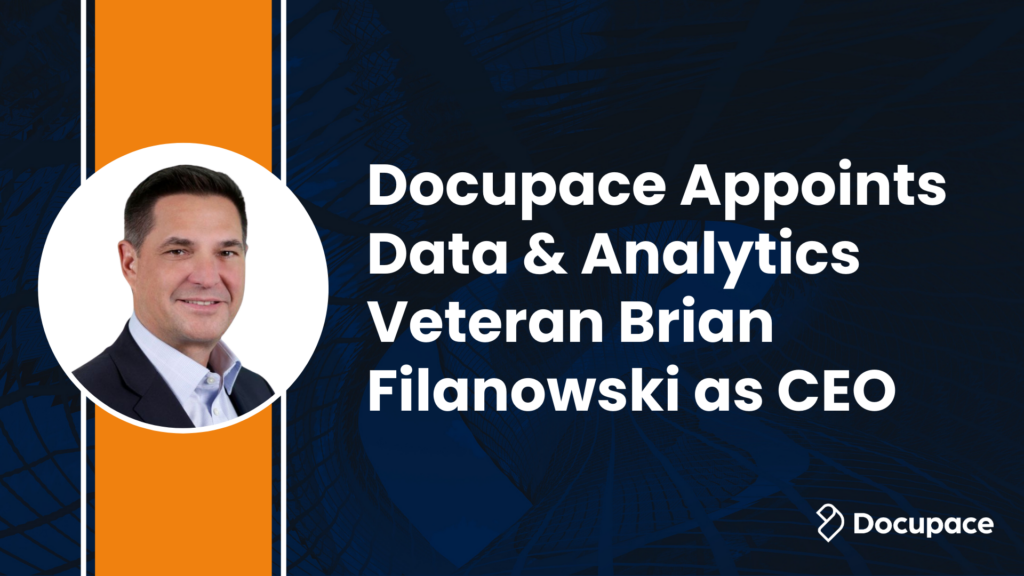
Brian Filanowski Appointed Chief Executive Officer of Docupace
Filanowski brings over 30 years of experience building and leading high-growth financial technology platforms. He most recently served as General Manager of Finance Risk & Capital Markets at Dun & Bradstreet, and previously held executive roles at Fitch Group, including President of Fitch Solutions, where he led strategy, operations and product development for the firm’s data and analytics business. Filanowski’s earlier positions at Bloomberg and Thomson Reuters/Refinitiv focused on enterprise data management, product strategy and new business development across financial markets technology.
Filanowski succeeds David Knoch, who led Docupace through a period of significant growth and whose leadership established the company as a leading premier operations technology platform for wealth enterprises.
“David’s strong leadership elevated Docupace to be the back-office software provider of choice, and we couldn’t be more grateful for his partnership and dedication,” said Lori Hardwick, Chair of the Docupace Board of Directors. “Brian’s experience leading billion-dollar businesses and standing up new verticals will be an asset for Docupace and our clients as we grow our portfolio of best-in-class technology solutions for wealth enterprises. He truly understands the power of data and the mission-critical role Docupace’s portfolio of solutions plays in empowering enterprise firms to run efficiently and compliantly,” said Hardwick.
Filanowski joins Docupace during a dynamic and rapidly changing environment for wealthtech providers. Bringing InvestEdge into Docupace strengthens the company’s position as one of the only independent platforms purpose-built to solve complex, tightly regulated challenges for wealth management operations. Together, Docupace and InvestEdge create a unified data fabric, positioning the company to apply AI as embedded intelligence to facilitate the handshake across onboarding, supervision and surveillance workflows.
“I’m thrilled to be joining Docupace at such an exciting point of inflection,” said Filanowski. “As we look ahead, our plan is to build upon our strong market position and significantly accelerate growth by developing new innovative products that leverage AI, expanding our customer base and executing on additional strategic acquisitions that bring value to our clients. I look forward to working alongside our talented team and partners to take Docupace to new heights.”
InvestEdge: Market-Leading Compliance Capabilities Across Market Segments
InvestEdge supports more than 100 financial institutions, including 10 of the 50 largest U.S. banks and trust companies, to monitor over 750,000 investor accounts representing more than $3.5 trillion in assets. The ComplianceEdge platform delivers mission-critical compliance supervision across three core areas: investment reviews, trade surveillance and account monitoring.
“As an established platform, we see an opportunity with our scale and data footprint to responsibly integrate AI and modern architecture into mission-critical operations,” said Filanowski.
The platform processes tens of millions of transactions annually while maintaining one of the industry’s lowest false-positive rates, enabling firms to focus compliance resources on meaningful risk rather than noise. Its configurable rules framework supports a wide range of regulatory obligations, including SEC, FINRA, NAIC and OCC Regulation 9 requirements.
Together, Docupace and InvestEdge provide firms with the flexibility to adopt the right level of compliance sophistication as their business grows.
“Joining Docupace creates tremendous opportunity to accelerate innovation while maintaining the regulatory depth that our customers depend on,” said Jeffrey Cowley, President of InvestEdge. “Docupace’s proven track record integrating acquisitions demonstrates its ability to enhance acquired platforms while increasing customer value. Our bank trust and broker-dealer clients will benefit from Docupace’s modern technology infrastructure and expanded resources while retaining the specialized compliance capabilities they rely on daily.”
Docupace is backed by Genstar Capital, a leading private equity firm that has been actively investing in high-quality companies for over 30 years. Genstar currently has approximately $50 billion of assets under management and targets investments focused on targeted segments of the financial services, industrials, software and healthcare industries. Genstar acquired a majority stake in Docupace in August 2024.
With a strong balance sheet and a new leader, Docupace continues to invest in product innovation, client experience and strategic expansion, reinforcing its long-term commitment to the wealth management industry.
Special Webinar Upcoming
Join new Docupace CEO Brian Filanowski and leaders from both organizations for a special webinar on Thursday, March 5, at 12:00 pm ET. The call will provide an inside look at why we’ve come together, the vision driving this acquisition and how we’re building a future that serves you better.
About Docupace
Docupace is a software provider focused on digitizing and automating operations in the financial advice and investment industry. Financial services firms use the company’s cloud-based platforms, including Docupace, Hubly and PreciseFP, to reduce back-office expenses, improve efficiency, fulfill regulatory obligations, strengthen recruiting, and enhance the experience of advisors and investors. With headquarters in Holmdel, New Jersey, Docupace serves some of the largest independent broker-dealers, banks, insurance companies and registered investment advisers (RIAs) in the financial services industry, supporting over 400,000 active users and processing over 11 million work items annually. The company received more than 20 industry awards and recognitions in 2025, including WealthTech Employer of the Year (WealthTech Americas 2025), Investment News Best Places to Work 2025, CNBC World’s Top FinTech Companies 2025 and multiple ThinkAdvisor Luminaries Awards.
For more information, please visit www.docupace.com.
About InvestEdge
InvestEdge is the market-leading provider of regulatory compliance software to bank trust departments and an established leader in broker-dealer and RIA compliance. The company’s ComplianceEdge platform serves wealth management firms with comprehensive trade surveillance, account monitoring, investment reviews, and fiduciary compliance capabilities. Founded in 2000, InvestEdge operates with a fully remote workforce serving more than 100 financial institutions, including 10+ of the 50 largest U.S. banks, processing over 750,000 investor accounts daily. The company maintains strategic channel partnerships with SEI, BNY, RegEd, and First Rate.
For more information, visit www.investedge.com.
Media Contacts:
Ryan George
Chief Marketing Officer
ryan_george@docupace.com
Donald Cutler
Haven Tower Group
dcutler@haventower.com
Compliance is essential for firms of all sizes. However, as threats evolve and the need for vigilance intensifies, staying on top of compliance can feel like an overwhelming task. That’s especially true for RIA firms that may have limited resources to dedicate an employee to full-time compliance management.
Vendor-built technology, including customer relationship management (CRM) software, pre-populated forms, portfolio management systems and workflow management software, can be an RIA’s greatest asset in staying ahead of compliance risks and providing a high-quality (and secure) experience for clients.
Reduce Audit Risk
Audits are crucial for maintaining compliance. When firms are prepared and have robust compliance practices in place, audits are non-eventful. However, firms that fall behind in their compliance efforts often find audits to be time-consuming and expensive, pulling resources away from other client-facing tasks to correct mistakes.
Vendor technology integrates compliance management into the financial services compliance tools, making it simple for RIAs to stay on top of changing regulations and streamline their compliance efforts. Those processes pay off — firms using vendor tools report fewer audit exceptions. That’s because vendor technology is proven and integrated, creating an audit-ready single source of truth that ensures data is consistent and in compliance. Robust vendor technology leaves an audit trail with each client interaction and transaction, ensuring that records are properly stored and organized so they can be easily accessed when needed during an audit.
Stay Up to Date with Changing Regulations
Financial services regulations are continually changing, often to keep pace with new technology and evolving threats. According to recent surveys, the biggest compliance concerns for RIAs are AI and predictive analytics.
To stay compliant, RIAs must stay on top of the regulations. They can’t rely on doing things the way they’ve always been done because compliance is an evolving process. Even a practice that was in compliance a few years ago could be flagged in an audit today if it doesn’t align with current regulations.
Instead of manually having to update software and change processes, as would typically be required with in-house technology, vendors automatically update systems with SEC/FINRA rule changes. That means RIAs can rest easy, trusting that their proven technology will adapt with changing regulations instead of having to track changes and make updates manually. The result is RIAs who can focus more time on clients and less time on managing software or stressing about compliance changes.
Simplify Compliance Management
Small RIA firms or solo advisors can easily spend numerous hours a week managing compliance (some experts estimate solo RIAs spend up to 40% of their time on compliance-related tasks). Leveraging vendor-built RIA compliance software can simplify processes and significantly reduce hands-on compliance activities without sacrificing quality.
Vendor technology is robust, proven and integrated, so compliance efforts are spread throughout the firm, not on a single type of task. These platforms streamline and often automate compliance activities, ensuring data is accurate, documents are stored properly, and RIAs are following the most current regulations.
Strong compliance processes build confidence and reduce legal risk. Advisors and back-office staff can feel confident that their firm is adhering to regulations, and clients can be assured that their information is secure and protected.
Firms often fall into the trap that building technology in-house is the better option. However, vendor technology is far superior when it comes to essential compliance processes. Using trusted vendor-built tools frees RIAs from the stress of complex compliance management, allowing for smoother audits and more time to spend with clients.
For integrated technology for RIAs, there’s no better option than Docupace. Purchasing software provides instant access to top-tier compliance processes and automatic updates. Buying a product allows you to rest assured that you have the best product and can focus on what matters most: your clients.
When you’re ready for new software, turn to Docupace for a full-service, integrated platform. Click here to download our Buy vs. Build guide to see how smart firms move faster with less risk.
It’s an age-old question: buy or build? For financial firms choosing between buying vendor software or building a system in-house for their wealth management technology, the choice can determine future growth opportunities, available resources and workflows.
Let’s look at a strategic framework to help you decide when it makes sense to build technology — and when buying is the better strategic choice.
When Building Is the Right Choice
Building a completely custom platform can be a solid choice for some firms, but it isn’t the best solution for every situation. Here are three times when building is the right decision:
- Custom IP. Building in-house allows firms to connect the system to their specific IP addresses. That makes it easier to share data and stay connected within the firm. Building a custom IP gives firms total control over their data, which can help keep information more secure and unique.
- Competitive differentiation. Financial services is a competitive space, and firms may want to use their technology to create a competitive advantage. Building in-house allows firms to create a totally customized product and innovate with features and options that no other firm has. Those unique qualities can make the difference when attracting new clients.
- Specialized tools. A firm may need digital tools that don’t come standard on most vendor products. It could be because of the type of products and accounts offered, the niche clientele or internal workflows. If your firm needs specialized tools to work effectively, it’s often easier to build them yourself than to try to explain to a vendor or tweak an existing tool.
When Buying Is the Right Choice
Buying often gets a bad reputation for being too expensive or cookie-cutter. But there’s a reason vendors include popular features in their products: they work! Buying can be a solid option for a firm that wants to adopt new technology immediately. Here are three situations when buying is the better option:
- Back-office automation. Automation is huge for firms that want to do more with less. It also helps streamline workflows, allowing advisors and employees to spend more time with clients. However, building automation is complex, and automation options continue to evolve as technology advances. Firms that prioritize back-office automation can benefit from buying an established platform with built-in automation options.
- Compliance. Compliance is crucial for all firms and should be central to processes. Buying a platform designed for financial firms with strong compliance features helps firms know they have the right tools to stay compliant. Buying a system that prioritizes compliance can be a good option for firms that need to improve compliance efforts or firms that don’t have well-established compliance processes.
- Onboarding. Adopting new technology can be challenging, especially when it interrupts existing systems. Onboarding a vendor product usually comes with resources from the vendor, such as learning modules, individual coaching and on-site training. To get teams up and running with the technology faster, it can be helpful to buy.
Buy and Build: Flexible Options
Perhaps the ideal financial services technology strategy provides the best of both worlds: layer custom features on vendor platforms for ultimate flexibility. This option provides firms with the freedom to build specialized tools and features, establishing a competitive advantage without the time-consuming task of building a platform from scratch and worrying about compliance and onboarding.
Instead of having to reinvent the wheel or build every platform and function from scratch, firms can collaborate with vendors to get more flexible results.
Those partnerships can happen between wealth management firms and vendor development teams. The firms bring an expert understanding of their workflows and clients, and the vendor brings expertise in technology and the best features to help the firm reach its goals. Instead of working in isolation to build a platform in-house, firms can partner with established vendors to leverage their knowledge and resources.
When you’re ready for new software, turn to Docupace for a full-service, integrated platform. Click here to download our Buy vs. Build guide to get the full decision-making framework for smarter tech investments.
When looking to adopt new technology or digital tools, many wealth management firms fall into the trap of trying to build the tech themselves. On the surface, keeping the development in-house can seem like a way to create a tailored product and have full control over the process and features.
Unfortunately, that’s rarely the case.
Firms simply don’t have the resources or expertise to build technology as effectively as vendors. By relying on in-house products, firms can fall into an innovation gap and end up with less optimal technology, which puts them behind the competition. Let’s dive into why wealthtech firms can’t compete on their own and how vendor partnerships can help.
Building Tech Comes With a Learning Curve
One of the biggest barriers to building robust technology in-house is a lack of skills and experience. Wealth management firms typically hire for skills related to financial aptitude, the ability to work with clients and experience in the field. And while many technology skills can be learned on the job, there tends to be a wide gap in skill levels between firms that hire a single employee or small team to build technology or try to learn as they go and vendors with a large team of experienced, proven employees who are connected and dedicated to that world.
One study found that 64% of financial services leaders lack internal expertise in regtech, APIs, cybersecurity and data flow — all crucial elements of technology platforms. Firms need a robust financial technology strategy, but most lack the resources or experience to dedicate to building and implementing one. And if they do allocate an in-house team to building technology, that often pulls resources away from other crucial client services.
Innovation Is a Full-Time Job
Building technology isn’t a one and done project. After building the initial platform, teams have to continually make updates and adjustments to tailor workflows, integrate new technology or find innovative solutions to ensure the platform is still effective.
That means that wealth management firms need a dedicated tech support team long after the initial build. But that can be costly and time-consuming, especially when in-house teams are competing against vendors with large dedicated teams to drive fast wealthtech innovation cycles. The speed of development and execution of vendor teams far outpaces in-house development, meaning wealth management firms risk falling behind or using outdated or ineffective technology. Trying to keep up with the competition with limited talent also incurs significant costs and operational risks, which can result in a substantial amount of time and money being spent on a suboptimal product.
Partnerships Give Firms Access to Strong Tech
When it comes to technology, partnerships are far more efficient. Instead of having to reinvent the wheel or build every platform and function from scratch, development teams can collaborate and work together to get faster, more innovative results.
Those partnerships can happen between wealth management firms and vendor development teams. The firms bring an expert understanding of their workflows and clients, and the vendor brings expertise in technology and the best features to help the firm reach its goals. Instead of working in isolation to build a platform in-house, firms can partner with established vendors to leverage their knowledge and resources.
Firms often think that building technology in-house is a guaranteed way to get a customized product at a discount. However, partnering with a vendor is the far superior option for firms to stay competitive. Instead of playing catch-up with an in-house team, vendors help firms lead the charge with high-quality technology.
For integrated technology for RIAs, there’s no better option than Docupace. Purchasing software provides instant access to top-tier compliance processes and automatic updates. Buying a product allows you to rest assured that you have the best product and can focus on what matters most: your clients.
When you’re ready for new software, turn to Docupace for a full-service, integrated platform. Click here to download our Buy vs. Build guide to see how smart firms move faster with less risk.
For RIAs, time is literally money. The faster you can develop leads, connect with clients and open new accounts, the more growth opportunities you have.
One of the best ways to set yourself and your firm up for success is by adopting new technology. Time-to-market influences everything from client acquisition to advisor retention and long-term growth. Buying the technology instead of building it in-house helps you get there faster.
Faster Client Onboarding
Today’s RIA clients have a strong digital experience in everything from buying groceries to streaming movies and planning trips. They expect the same seamless, tech-driven experience from their financial advisor. Meeting those expectations requires having updated technology and tapping into all the resources available. Research found that clients expect digital onboarding within 6–12 months. They don’t have time to wait for a firm to build technology in-house to keep moving toward their financial goals.
RIA digital onboarding can make or break the client experience. Nearly half of investors will abandon digital RIA client onboarding due to a poor experience. RIAs can’t risk using in-house products that are slow to develop and potentially out of date. Instead, they need fast adoption of current technology so they can start on the right foot with a smooth digital experience. Plus, updated technology is easily scalable to create a consistent experience for all clients instead of manually managing each client interaction.
Empower Advisors with Tech Tools
Advisors want to be able to do their jobs, not spend time resolving technology issues. It’s safe to say that RIAs joined the industry because they want to work with clients and manage funds, not develop software. Waiting for an in-house tech product likely means that advisors are working with a subpar product while other firms use leading technology.
Faster advisor technology adoption leads to better advisor satisfaction and a more positive client experience. Buying a trusted, established product enables robust technology to reach advisors quickly, providing them with the tools to deliver a consistent, well-rounded client experience. Technology is one of the top priorities for financial advisors, particularly for the younger generation of advisors entering the industry. Investing in reliable, ready-to-use tech can help a firm attract and retain clients and advisors, keeping all parties satisfied and able to spend more time connecting and less time managing technology.
Speed Is a Competitive Advantage
The RIA industry is growing rapidly, which means that competition is increasing rapidly as well. Falling behind on tech hurts competitiveness and growth potential. Instead of interacting with clients and nurturing leads, firms that build technology in house too often find themselves focusing on getting their tech running rather than growing the firm.
As AI becomes an increasingly powerful tool for RIAs, technology is advancing more rapidly than ever before. In the time it takes for a firm to build a tech stack, the technology could already be outdated and replaced by something more robust. That means that not only did the advisor spend time building the product, but it didn’t even bring a competitive advantage. That time and resource investment is ineffective because it didn’t advance the firm.
Firms often fall into the trap that building technology in-house is the better option. However, those builds come with a steep learning curve and often slow progress, potentially releasing a tech product long after the competition. Don’t reinvent the wheel; leverage existing technology for faster and smoother implementation. Buying launches technology four times faster than building. That means working with clients, building relationships and growing your firm four times faster.
Your best partner for buying tech? Docupace. Purchasing proven software provides instant access to a reliable product, backed by experts who can customize workflows and keep the product secure and up-to-date. No more tinkering on the backend or hoping the makeshift security is robust. Buying a product allows you to rest assured that you have the best product and can focus on what matters most: your clients.
When you’re ready for new software, turn to Docupace for a full-service, integrated platform. Click here to download our Buy vs. Build guide to see how smart firms move faster with less risk.
Blowing into a Nintendo cartridge? Good nostalgia. Filling out page after page of PDFs, only to have someone rekey that same information into three different systems? Bad nostalgia. Yet many advisory firms are still stuck here—and it’s costing them clients and time.
PreciseFP, the award-winning data gathering and client engagement solution from Docupace, recently published a new report, Manual Data Is Holding You Back, in which they find that one-third of advisors say they don’t have enough hours in the day because compliance tasks and data entry consume them. That’s not just inefficiency — it’s a warning sign.

Clients Have Evolved. Has Onboarding?
Today’s investors expect Amazon-level convenience and Spotify-style personalization. Deloitte points out that customer experience—not investment performance—is the top differentiator. If onboarding starts with clunky forms or outdated processes, you’ve already lost ground before the relationship begins.
Productivity Is on the Line
Cerulli projects more than 100,000 advisors will retire in the next decade, leaving fewer professionals to serve a growing pool of investors. Advisors can’t afford to waste hours duplicating data. PwC underscores the urgency: margin pressure and rising client expectations demand digital-first solutions.
Efficiency Builds Confidence
Manual entry doesn’t just waste time; it creates errors, delays, and compliance headaches. Automated onboarding flips that script. With PreciseFP’s integrated, secure, and customizable digital forms, data flows seamlessly across 30+ platforms—giving advisors time back to focus on strategy and client care.
The Bottom Line: The Future Is Digital
Onboarding sets the tone for the entire client journey. The firms that win will be those that embrace automation and deliver the streamlined experiences clients already expect.
Learn more about what PreciseFP can do for you by starting a free 14-day trial, plus get your copy of the new report, Manual Data Is Holding You Back today.
For many wealth management firms, growth starts with the client relationship. But oftentimes, the health of the relationship itself is determined by how efficiently the firm can support that client behind the scenes. One of the clearest examples of this is the new account opening process.
New account opening may seem like a tactical task, but it directly impacts advisor productivity, client satisfaction and how quickly a firm can realize revenue from new business. When that process is slow, error-prone or inconsistent, the effects ripple across the entire organization.
But when new account opening is automated, streamlined and integrated into the broader back office infrastructure, it wows clients, frees up advisors and becomes a strategic growth lever.
Why New Account Opening Matters More Than You Think
For clients, opening an account is one of the first experiences they have with a firm. It sets the tone for the relationship. Delays, duplicate requests and errors in documentation can make the process feel disorganized or unprofessional, especially for high-net-worth individuals who expect precision and speed.
For advisors, the new account opening process affects how quickly they can move from a signed agreement to funded assets. Every hour spent chasing missing paperwork or correcting errors is an hour not spent advising clients, deepening relationships or prospecting.
For operations teams, new account opening is a complex workflow that touches compliance, custodians, documentation and data management. Manual processes increase the chance of NIGO (not in good order) submissions, regulatory risk and rework that slows everything down.
In short, when new account opening is inefficient, it limits growth and scalability.
What a Streamlined Process Looks Like
Back office automation changes the equation. A well-designed new account opening process can reduce time to fund, improve form accuracy and reduce the number of touches required to complete each workflow. Instead of email chains, printed forms and disconnected systems, firms move to a digital, guided process that supports every team involved.
Here’s what that looks like in practice:
- Advisors launch the process from a single platform with pre-configured workflows
- Clients complete forms in a guided interface with built-in data validation
- Custodian requirements are applied automatically
- Compliance is built right into the process
- Operations teams track progress in real time and resolve issues proactively
By replacing high-friction manual work with back office automation, firms increase accuracy and reduce cycle times without increasing headcount.
The Impact on Advisor Productivity and Firm Growth
When new account opening is fast and reliable, advisors can onboard more clients with less effort. That makes a direct impact on productivity, especially for teams looking to grow assets under management (AUM) without scaling staff at the same pace.
It also changes the nature of support. Instead of troubleshooting paperwork, back office staff can focus on strategic projects, data quality and process improvements. And since the process is standardized, firms can expand to new offices or advisor teams without building custom workflows for each one.
Improved onboarding also helps with client retention. A seamless experience early in the relationship builds trust and increases satisfaction, two key drivers of long-term loyalty.
How Docupace Supports Scalable New Account Opening
With back office automation, Docupace helps firms transform new account opening into a growth asset. With automated workflows, built-in compliance logic and real-time task tracking, the platform reduces time to fund, lowers error rates and improves transparency across teams.
Advisor productivity skyrockets as advisors spend less time on paperwork. Operations teams catch issues earlier. Leadership gets a clear view of onboarding performance. And clients get the fast, polished experience they expect from a modern advisory firm.
When growth is the goal, scalable processes make it possible. New account opening is one of the most important places to start. Learn more by scheduling a discovery call.
If you feel like you don’t have enough time for clients and strategic growth, you aren’t alone. A recent survey by J.D. Power found that nearly one-third of advisors report not having enough time to spend with clients because of time-consuming administrative tasks. And among advisors who claim they don’t have enough time, more than 40% spend more time on tasks such as administrative work and compliance than on interacting with clients.
Luckily, there’s a simple solution to free up more time for human-based tasks without sacrificing quality: automation. The most time-consuming tasks, such as data entry, document storage and scheduling, can be automated to provide smoother processes and more accurate results, freeing up time for more important tasks, like building relationships with clients. Your best tool for automation? Docupace. As a leader in automation for financial advisors and firms of all sizes, Docupace can streamline workflows for clients, advisors and back-office staff.
Here are some key tasks Docupace can automate.
1. Collecting Client Information
Gathering accurate client information is critical to delivering tailored financial advice, but the process can quickly become a source of friction if it relies on manual steps or disconnected systems. When data is spread across PDFs, emails, or handwritten forms, advisors waste time chasing details and rekeying the same information into multiple tools.
Docupace simplifies how client information is collected, stored and shared by acting as the central hub for your data. Whether it enters your system through a CRM, a third-party data tool or a custom onboarding process, Docupace keeps it all organized, secure, and audit-ready. Integrated workflows eliminate redundant data entry and give advisors immediate access to the information they need without delay or guesswork.
By providing structured, accessible, and real-time visibility into client data, Docupace ensures your team can serve clients faster and with more confidence.
2. Streamline New Account Opening from the Start
When managed manually, tracking and nurturing leads for potential new clients can be challenging and time-consuming.
Opening a new account should feel effortless for both clients and advisors, but when the process is handled manually, it often creates unnecessary delays and friction. Tracking leads, collecting forms, chasing signatures and ensuring compliance takes valuable time away from client service and introduces more risk for errors.
Advisors can see exactly where each new client stands, while operations teams benefit from built-in compliance checks and real-time status updates that reduce NIGOs and eliminate back-office bottlenecks.
The result is a faster, more accurate, and fully digital onboarding experience that gives clients confidence from day one and gives your team time back to focus on high-value work.
3. Managing Documents
Managing documents in a wealth management firm involves more than just going paperless. It means maintaining strict compliance, ensuring instant access to records, and protecting sensitive data at every step. When these tasks are handled manually or scattered across systems, they eat up time, increase risk and frustrate both teams and auditors.
Docupace brings all books and records — past and present — into a secure, centralized platform built to meet SEC and FINRA requirements. Instead of searching through email threads, shared drives, or file cabinets, advisors and operations teams can quickly retrieve what they need in just a few clicks. When working manually, employees spend an average of two hours per day looking for documents or information they or others need to do their jobs.
With automatic filing, WORM-compliant cloud storage, and role-based access controls, Docupace simplifies how firms manage documents while supporting full audit readiness. The result is a modern document experience that reduces operational drag and improves firm-wide confidence in how information is handled.
4. Strengthening Compliance Without Slowing Down
Staying compliant is not optional, but it should not require hours of manual oversight or a mess of disconnected tools. When compliance processes rely on spreadsheets, separate systems or outdated workflows, it creates unnecessary risk, increases the chance of errors, and makes your team less responsive to regulatory changes.
Docupace streamlines compliance and surveillance by centralizing everything in one intelligent platform built specifically for wealth management. Advisors and compliance teams can automate monitoring, apply custom rules and get real-time alerts that flag issues before they become problems. Whether it is trade surveillance, document review or licensing updates, everything is logged, traceable and audit-ready.
Instead of scrambling to meet evolving requirements or digging through multiple systems, your team can manage compliance confidently and proactively with tools that support your entire operation
5. Staying on Top of Client Meeting Prep
Client meetings are high-value moments, but the prep work behind them can be time-consuming. From gathering forms and paperwork to ensuring compliance and accuracy, a lot has to happen before you ever sit down with a client.
Docupace helps eliminate the operational drag by digitizing the prep process. With automated workflows, prefilled forms and real-time data syncing, firms can get everything in place ahead of meetings without the back-and-forth. Advisors stay organized and focused, while the back office keeps tasks moving efficiently behind the scenes.
Instead of chasing signatures, missing paperwork or rekeying data last minute schedule a discovery call to learn more about the impact of Docupace.
At first blush, opening accounts manually may seem like the most practical way to onboard new clients. But what might appear cost-effective on the surface often translates to hidden expenses that can cost you time, budget and client relationships.
Here’s a look at the commonly overlooked costs of manual account opening and how rethinking your process can save you time, money and frustration.
1. Time Lost to Redundancy
Manual account opening processes, by their nature, are time-consuming. Tasks like gathering client data and completing forms manually require hours of tedious labor. When you scale this, you’re looking at significant time lost to functions that could otherwise be automated.
The Solution: By introducing a paperless onboarding system, you can automate repetitive tasks like data entry and document uploads. This cuts down on time spent in the onboarding process and supports consistency in the client experience.
2. Higher Risk of Errors
As the saying goes, “to err is human.” Even the most competent back-office professional succumbs to oversight when managing a significant amount of paperwork. Misspelled client information, missing compliance requirements or misplaced documents can slow down the process and even expose practices to regulatory scrutiny.
The Solution: Automated account opening systems reduce human error by validating real-time data and ensuring all required fields are completed before submission. Digital checks and balances offer peace of mind in terms of compliance and minimize mistakes.
3. Lower Client Satisfaction Scores
The manual process is often marked by delays, frequent back-and-forth communications and lost trust if someone drops the ball. Clients today expect integrated digital experiences. Lengthy or antiquated processes can leave them frustrated and jeopardize loyalty. Don’t leave anything to chance when you can rely on proven systems. According to Julia Littlechild’s 2022 research, only about 26% of clients are engaged.
The Solution: A seamless digital onboarding experience is the best way to keep clients engaged and happy. Integrating conveniences like e-signatures, automated notifications and real-time updates can improve the process for your team and the client.
4. Compliance and Regulatory Risks
Manually tracking compliance requirements can expose you to mistakes or oversights. One innocent mistake can create headaches like steep fines, audits or even reputational damage.
The Solution: Invest in technology built with financial compliance in mind. Many automated platforms have compliance checks baked in, to ensure all documents meet regulatory standards.
5. Hidden Operational Costs
While manual account opening may seem budget-friendly, operational costs over time are not insignificant. Printing costs and storing physical documents can impose burdens on administrative staff and drain your firm’s resources.
The Solution: Shifting to a paperless onboarding process can reduce operational costs, simplify workflows and allow your team to focus on what matters the most. Plus, it’s better for the planet.
Efficiency and accuracy are the currency in today’s world. While manual account opening might feel like the comfortable standard, the hidden costs may be sabotaging your practice. An automated account-opening solution gives you more hours back in your day, ensures compliance, supports client engagement and lowers operational costs. Supporting this claim, Cerulli Associates found that firms that extensively incorporate technology report higher productivity and efficiency. To gauge the return on investment, Michael Kitces suggests tracking time for up to 6 weeks to gather meaningful insights about how teams spend their time.
Now’s the time to explore tech solutions designed with financial advisors in mind. Docupace’s cloud-based platform brings a new dimension to new account opening, compensation, surveillance and compliance. Plus, teams can digitize critical processes, improve oversight and maintain secure and compliant records in one centralized system. Click here to schedule a discovery call.
Looking for a way to scale your firm, provide great service, and boost efficiency? It starts with standard operating procedures. Streamlining these essential steps helps take firms to the next level. In a recent webinar with Wealthbox, we discussed why it matters and how to make it happen.
Why Standardizing Matters
While advisors provide personalized recommendations and service to every client, they follow many of the same processes and steps for every interaction or account. In essence, standard operating procedures ensure consistency throughout key financial advising processes. Instead of taking a different approach or following different steps for each client, standardizing operating procedures creates a streamlined and expected process.
Streamlining standard operating procedures is critical for firms of all sizes. It includes everything from the order in which information is gathered to how it is analyzed, secured, and stored. Standard operating procedures can also dictate how often clients are contacted, how leads are managed in the pipeline, how clients are segmented, and more. Consistent, standard procedures allow for consistent indexing so that advisors and staff can easily find historical and current projects. Instead of having to remember the unique indexing for each project, a standardized approach to processes, documents, and storage creates simplicity.
There are countless benefits to standardizing operating procedures, including the following:
- Improved client experience. With smooth processes, clients can get a personalized and consistent experience and trust that their information is secure and compliant.
- Streamlined reporting. Clear operating procedures let advisors and staff know what needs to be reported and stored. Automation and standardization go hand in hand so that documents can be stored and information can be reported seamlessly.
- Scale efficiently. Instead of manually determining processes for each client, standard operating processes allow advisors to move clients along more quickly without sacrificing quality, allowing them to expand their bandwidth and scale the firm’s growth.
How To Standardize
Even for advisors who understand the basics and importance of streamlining standard operating procedures, it can be challenging to know how to implement changes.
Start by establishing what needs to be standardized. This typically includes information about new client onboarding and new account openings. What information do you collect for every new account? What processes can be repeated for every new client? What are the steps to the ideal onboarding experience? Consider what steps and information you need for each type of account. Standardizing parameters makes it easy to create clear processes and organize searchable data. Use those parameters to create a workflow and set the foundation for what processes should look like.
Turn to trusted partners to manage leads and client onboarding. When firms know where leads and clients are in the pipelines, they can add specific scenarios to understand when and how to engage with current and potential clients.
Streamlining standard operating procedures doesn’t happen overnight. It can require trial and error and evolution, especially as client and account needs change. Everyone at the firm needs to be engaged. Successful firms leverage templates, either created custom for their firm or adapted from a template library. These templates clearly state what information needs to be gathered and empower advisors and staff to understand and follow standard operating procedures.
Docupace Streamlines Standard Operating Procedures
Above everything else, integrations and connecting data are the best ways to standardize. Automatically syncing data between systems reduces human errors and pushes information to the next tool so that nothing slips through the cracks.
Integration allows for automated handoffs in the process. Instead of manually working through each step, integrations smoothly and seamlessly move data through customized workflows to ensure everything is done properly. For example, integrating customer data collection through PreciseFP with a CRM system makes it easy to hand off the collected client data to the next step and keep everything organized.
“Docupace integrates with dozens of Fintech platforms, including leading CRM systems such as Redtail, Wealthbox, Salesforce, SmartOffice, and Advisors Engine. Working together, Docupace takes dozens of fields and automatically creates client folders — no re-entering common information or confusing indexing.”
Ready to take your standard operating procedures to the next level? Schedule a discovery call and learn how Docupace can help.
Enhancing the new Docupace platform to deliver a reimagined user experience pushed our teams to improve both the front-end user interface and back-end performance. This meant increasing scalability—not just in what we do, but in how we do it.
Docupace’s scalability initiatives focused on the following 12 leverage points.
- Performance Optimization: Improve system performance to handle increased workloads efficiently without compromising response times or user experience.
- Horizontal Scaling: Implement strategies to scale out by adding more instances of servers, services, and components to distribute workloads across multiple resources.
- Vertical Scaling: Upgrade individual components such as servers, databases, and infrastructure resources to handle higher loads by increasing capacity, processing power, or memory.
- Fault Tolerance and Reliability: Enhance platform resilience to handle failures gracefully, ensuring the Docupace platform remains available and responsive during hardware failures or network issues.
- Elasticity: Design systems to dynamically scale resources up or down based on demand, automatically provisioning or deallocating resources to maintain optimal performance and efficiency.
- Load Balancing: Distribute incoming traffic evenly across multiple servers or instances to prevent any single component from becoming a bottleneck.
- Database Scaling: Optimize database performance and scalability using sharding, replication, or partitioning to improve read and write throughput.
- Caching and Data Optimization: Reduce load on backend services and databases by storing frequently accessed data in memory or cache layers.
- Scalable Architecture Design: Build modular, loosely coupled systems that can be scaled independently, enabling flexible growth and efficient resource allocation.
- Monitoring and Alerting: Track system performance metrics, detect bottlenecks or failures, and proactively address issues before they impact users.
- Cost Optimization: Optimize resource usage and costs through dynamic scaling, pay-as-you-go cloud services, and elimination of inefficient resource utilization.
- Scalability Testing: Simulate real-world usage scenarios to identify bottlenecks, validate improvements, and ensure the platform performs under load.
Ready to Experience Docupace?
Docupace represents everything new in financial technology. It’s built to enhance your operations and client servicing—faster, smarter, and better than ever before. Schedule your discovery call today and be the first to experience the new Docupace platform. Trust us—you’ll be glad you did.When embarking on an ambitious journey, it’s important to identify where you want to go and why. When Docupace began to reimagine where we wanted to take the platform, we identified seven areas that were “must-haves” as part of this initiative.
Using a modern framework like Material-UI offers several key benefits for end users, enhancing their overall experience when interacting with web applications. Here are the primary advantages.
Key Benefits for End Users
1) Consistent User Experience
Material-UI adheres to Google’s Material Design principles, which provide a unified and predictable interface across platforms and devices. This consistency helps users feel more comfortable and familiar with the application, as they encounter design patterns and interactions similar to those used in other Material Design-based apps.
2) Intuitive Interactions
The framework incorporates subtle animations and feedback that make interactions more engaging and intuitive. These visual cues guide users through actions and transitions, enhancing usability. Because many users have already encountered Material Design in other applications, the learning curve is reduced.
3) Responsive Design
Material-UI components are built to be responsive, ensuring applications look and function well across screen sizes—from desktops to mobile devices. This adaptability is especially important as a large portion of users primarily access applications on mobile.
4) Accessibility
Material-UI emphasizes accessibility, with components designed for inclusivity from the start. This allows users with disabilities to navigate and interact with applications more easily, improving the experience for a broader audience.
5) Aesthetic Appeal
The design principles behind Material-UI promote visually appealing interfaces through bold color usage, thoughtful typography, and clear spatial relationships. This aesthetic quality not only attracts users but also contributes to a more enjoyable and engaging interaction with the application.
6) Customizability
While Material-UI offers a robust library of prebuilt components, it also supports extensive customization. This flexibility allows developers to tailor the interface to specific branding and functional requirements, ensuring the final experience meets user expectations while maintaining a high-quality, cohesive design.
7) Performance Optimization
Material-UI is built to support high-performance applications. Efficiently implemented components help reduce load times and improve responsiveness, which is critical for retaining user engagement. Modern frameworks also incorporate performance optimizations that result in faster page loads and smoother interactions.
In summary, using Material-UI enhances both the visual and functional aspects of web applications while significantly improving user satisfaction through consistent, intuitive, and accessible design.
Ready to get started with the new Docupace and take operations to the next level? Click here to learn more and schedule a discovery call.